Media
Who Are We To Stand In God's Way?
Summary
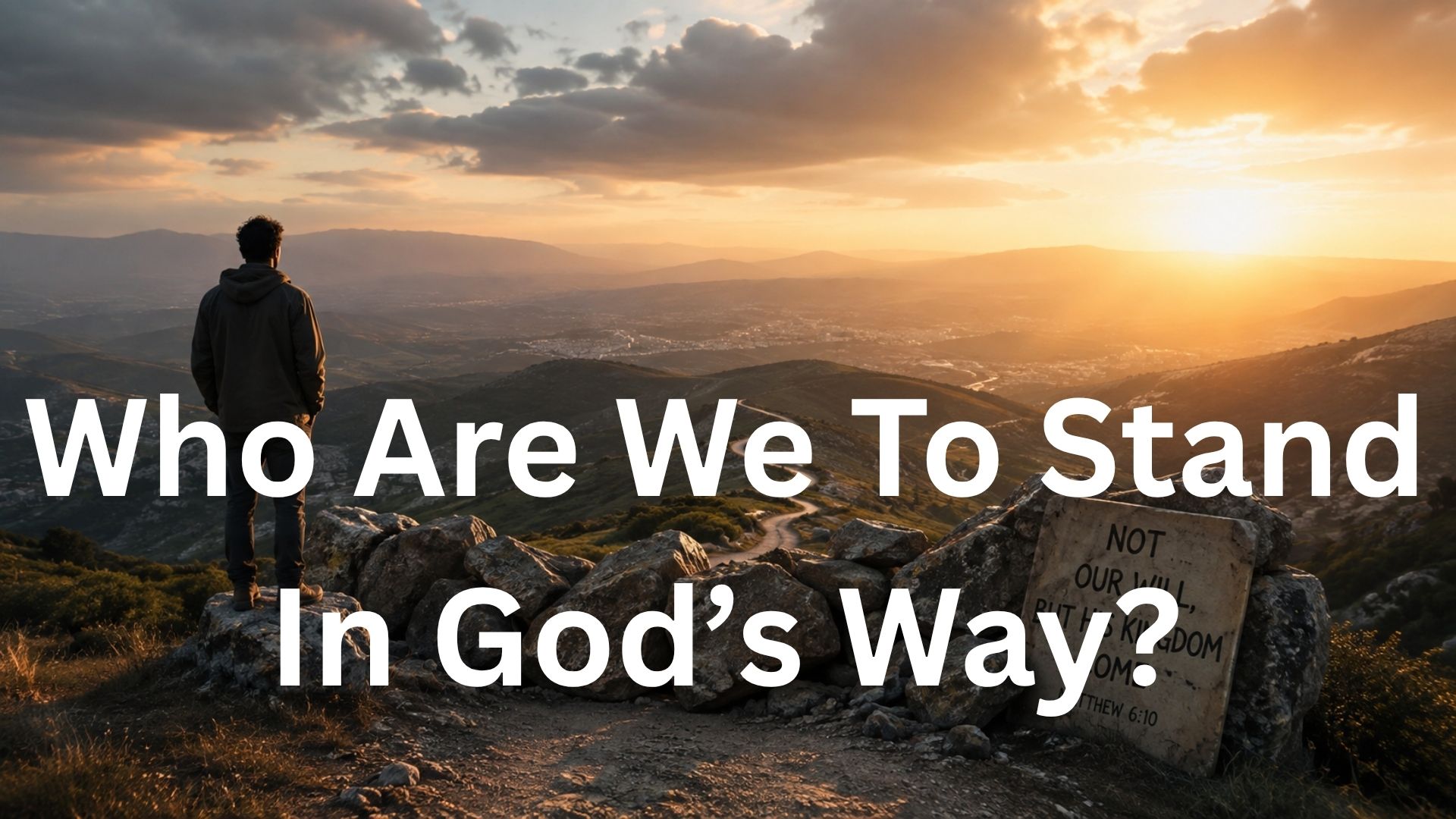
One of the oldest struggles in the Christian faith is not just believing the Gospel, but living it out across the lines we draw between ourselves and others. The story of Peter and Cornelius in Acts 11 reveals a tendency deeply embedded in human nature: we draw lines, build walls, and decide who is in and who is out. God's vision has always been a multiethnic, multinational family brought together under the authority of Christ. When Peter encountered Cornelius, God challenged him to stop making distinctions between people, and that same challenge echoes into our lives today. We can stand in God's way either actively, by refusing to fellowship with those who are different, or passively, by quietly opting out of His reconciliation work. Time does not heal the wounds caused by racism and division, but Jesus does. God's plan calls not for spectators but for participants who allow the fruit of the Spirit to be used for the healing of the nations. The only question is whether we will be part of what He is already doing.
Description
One of the oldest struggles in the Christian faith is not just believing the Gospel, but living it out across the lines we draw between ourselves and others. The story of Peter and Cornelius in Acts 11 is not ancient history locked away in the past. It is a mirror held up to every generation of believers. Luke tells this story multiple times in Acts, and that repetition is intentional. The Holy Spirit saw fit to have it told again and again because it addresses something deeply embedded in human nature: our tendency to draw lines, build walls, and decide who belongs and who does not. The circumcision party in Acts 11 represents a group of Christians who insisted that following Jesus was not enough. They required others to adopt their cultural and ethnic practices as well, adding to the Gospel in a way that Paul would later call a heresy. This was not just a first-century problem. For 2,000 years, people have been told that to truly belong, they must not only follow Jesus but also look, speak, and live like a particular group. That is a burden the Gospel was never meant to place on anyone.
God's vision for His kingdom has always been multilingual, multiethnic, and multinational. This is not a modern social agenda layered onto Christianity. It is the mission of God from the very beginning, as Paul makes clear in Ephesians 1 when he describes God's plan to bring everything together under the authority of Christ. Peter's encounter with Cornelius forced him to confront the distinctions he had been making, not just about food, but about people. God told him directly to stop calling common what He had made clean. And Peter's honest response was that he had argued with God, pushed back, and resisted, because he had once stood exactly where his critics stood. But God changed his mind, and that same invitation is extended to us. We can stand in God's way actively, by openly refusing to fellowship with those who are different, or passively, by quietly opting out and letting others carry the work of reconciliation. Both postures carry consequences, and the most immediate one is missing the joy of what God is doing.
Time does not heal the wounds caused by racism, slavery, or division. A wound left untreated does not simply get better on its own. But Jesus can heal what time cannot. When walls come down and people come together across lines of race and culture, that is not the passage of time doing the work. That is the Spirit of God, and He deserves the credit. God's reconciliation project calls for participants, not spectators. The fruit of the Spirit described in Galatians 5 is not just for personal benefit. It is the means by which God does His reconciling work through His people. Participation looks like getting to know neighbors who look or speak differently, refusing to stay comfortable in a circle that only looks like you, and choosing to love the people around you at work, at school, and in your community. God is glorified when His people are unified across every line the world uses to divide. That unity is not just a nice feeling. It is a testimony to the power of the Gospel, and God's mission will be accomplished with or without our cooperation. The only question is whether we will be part of it.
God's vision for His kingdom has always been multilingual, multiethnic, and multinational. This is not a modern social agenda layered onto Christianity. It is the mission of God from the very beginning, as Paul makes clear in Ephesians 1 when he describes God's plan to bring everything together under the authority of Christ. Peter's encounter with Cornelius forced him to confront the distinctions he had been making, not just about food, but about people. God told him directly to stop calling common what He had made clean. And Peter's honest response was that he had argued with God, pushed back, and resisted, because he had once stood exactly where his critics stood. But God changed his mind, and that same invitation is extended to us. We can stand in God's way actively, by openly refusing to fellowship with those who are different, or passively, by quietly opting out and letting others carry the work of reconciliation. Both postures carry consequences, and the most immediate one is missing the joy of what God is doing.
Time does not heal the wounds caused by racism, slavery, or division. A wound left untreated does not simply get better on its own. But Jesus can heal what time cannot. When walls come down and people come together across lines of race and culture, that is not the passage of time doing the work. That is the Spirit of God, and He deserves the credit. God's reconciliation project calls for participants, not spectators. The fruit of the Spirit described in Galatians 5 is not just for personal benefit. It is the means by which God does His reconciling work through His people. Participation looks like getting to know neighbors who look or speak differently, refusing to stay comfortable in a circle that only looks like you, and choosing to love the people around you at work, at school, and in your community. God is glorified when His people are unified across every line the world uses to divide. That unity is not just a nice feeling. It is a testimony to the power of the Gospel, and God's mission will be accomplished with or without our cooperation. The only question is whether we will be part of it.